- Opening Hours: Monday - Friday 9 am to 5 pm

- Time Office:
Monday to Friday 9:00am - 5:00pm
- Call Us:
(302) 991-7000
- Email:
allaboutconstructionlc@gmail.com
- New Castle Ave, New Castle, 19720, Delaware, USA
- Call us!(302) 991-7000
- Mail addressallaboutconstructionlc@gmail.com
Designing the Perfect Stamped Concrete Patio for Fall Gatherings - All About Construction, LLC
Jul/26
- allaboutconstruction.de
- Blog
- July 24, 2026
- 0 Comments
Discover the durable, cost-effective alternative to natural stone that transforms your backyard into an elegant seasonal sanctuary.
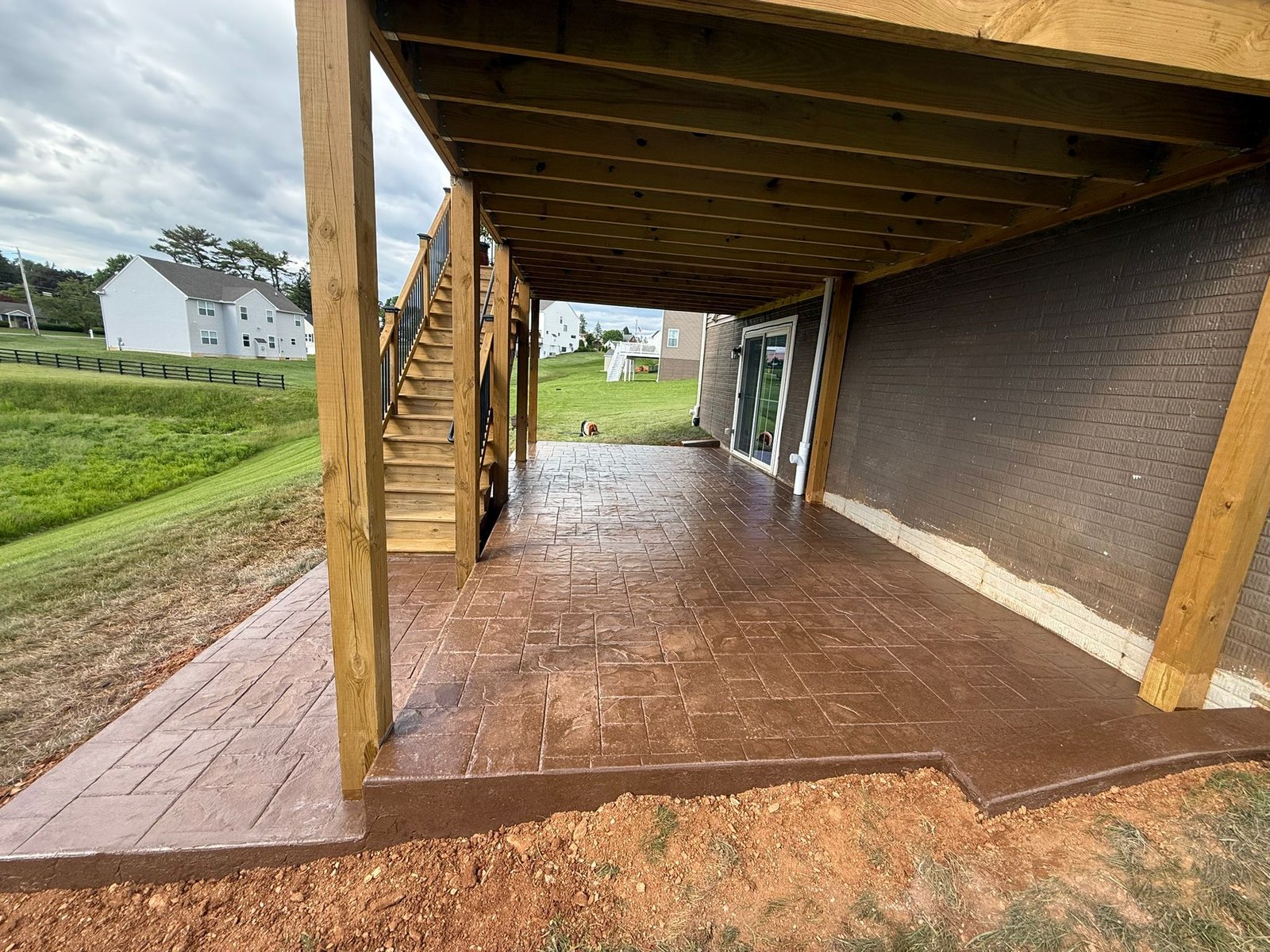
Homeowners across the Tri-State area increasingly view their backyards as essential extensions of their indoor living quarters. Whether you are hosting weekend gatherings during the crisp autumn months in Delaware or enjoying quiet evenings by a fire pit in Pennsylvania, a well-designed patio forms the structural foundation of outdoor lifestyle satisfaction. While natural materials like flagstone, slate, and individual stone pavers have historically dominated luxury landscapes, they come with substantial financial costs, complex installation demands, and high ongoing maintenance requirements. Today, stamped concrete has emerged as the premier design choice, seamlessly combining high-end architectural aesthetics with uncompromising structural resilience.
The Art and Engineering of Stamped Concrete
Stamped concrete is a sophisticated paving process wherein freshly poured, high-strength concrete is imprinted with specialized flexible mats right as it reaches its optimal curing window. This technique replicates the exact textures, deep organic irregularities, and complex grout lines of natural slate, hand-cut flagstone, weathered brick, or even exotic hardwood planks.
To achieve a lifelike appearance, professional installers utilize advanced coloring techniques:
-
Integral Color: Pigments are thoroughly mixed directly into the wet concrete batch, ensuring that the foundational hue runs completely through the slab.
-
Topical Acid Stains: Reactive chemical stains are applied post-pour to create rich, multi-dimensional variations and subtle earthy tones that mimic centuries-old quarry stone.
Why Stamped Concrete Outperforms Traditional Pavers
The primary structural benefit of a stamped concrete patio is its continuous, monolithic surface. Unlike individual interlocking pavers or flagstones, which rest on a shifting bed of sand and gravel, a poured concrete slab remains bound together as a single, unified engineering element.
This structural continuity completely eliminates the most common headaches associated with traditional backyard patios:
-
Zero Weed Growth: Because there are no loose joints or sand-filled gaps, invasive weeds and grass cannot sprout through your patio surface.
-
Pest Elimination: Ants and other burrowing insects find no loose crevices to nest in.
-
Surface Stability: In regions prone to frost and soil movement, unbonded paver stones frequently shift, creating dangerous uneven tripping hazards. A properly reinforced concrete slab maintains its pristine level for decades.
Financial Value and Low Maintenance
From a budgeting perspective, stamped concrete offers extraordinary value. The manual labor required to individually shape, cut, and level hundreds of natural stones drives project costs sky-high. Stamped concrete drastically compresses installation timelines while providing an identical—and often cleaner—visual aesthetic.
Furthermore, maintenance is refreshingly straightforward. While natural stone requires aggressive pressure washing, chemical weed treatments, and frequent joint sand replenishments, a stamped patio requires little more than a seasonal sweep and a fresh application of a protective topical sealer every few years to preserve its rich color and luster.
Secure Your Autumn Project with 13+ Years of Expert Craftsmanship. Don’t let winter weather compromise the structural integrity and market value of your property.
Protect your home with elite hardscaping solutions from All About Construction LLC.
Visit us online at www.allaboutconstructions.us or call us directly at +1 (302) 991-7000 to schedule your comprehensive on-site consultation.
Leave a Comment