- Opening Hours: Monday - Friday 9 am to 5 pm

- Time Office:
Monday to Friday 9:00am - 5:00pm
- Call Us:
(302) 991-7000
- Email:
allaboutconstructionlc@gmail.com
- New Castle Ave, New Castle, 19720, Delaware, USA
- Call us!(302) 991-7000
- Mail addressallaboutconstructionlc@gmail.com
What Nobody Tells You About Stamped Concrete Before You Buy It - All About Construction, LLC
May/26
- allaboutconstruction.de
- Blog
- May 1, 2026
- 0 Comments
The honest guide to stamped concrete — what it is, how long it lasts, and what can go wrong when it’s not done right
Stamped concrete is one of the most beautiful outdoor surfaces available, and All About Construction LLC installs it throughout Maryland, Delaware, New Jersey, and Pennsylvania. But like any specialty product, it comes with details that homeowners deserve to understand before they invest. Here’s the honest guide.
What Stamped Concrete Actually Is
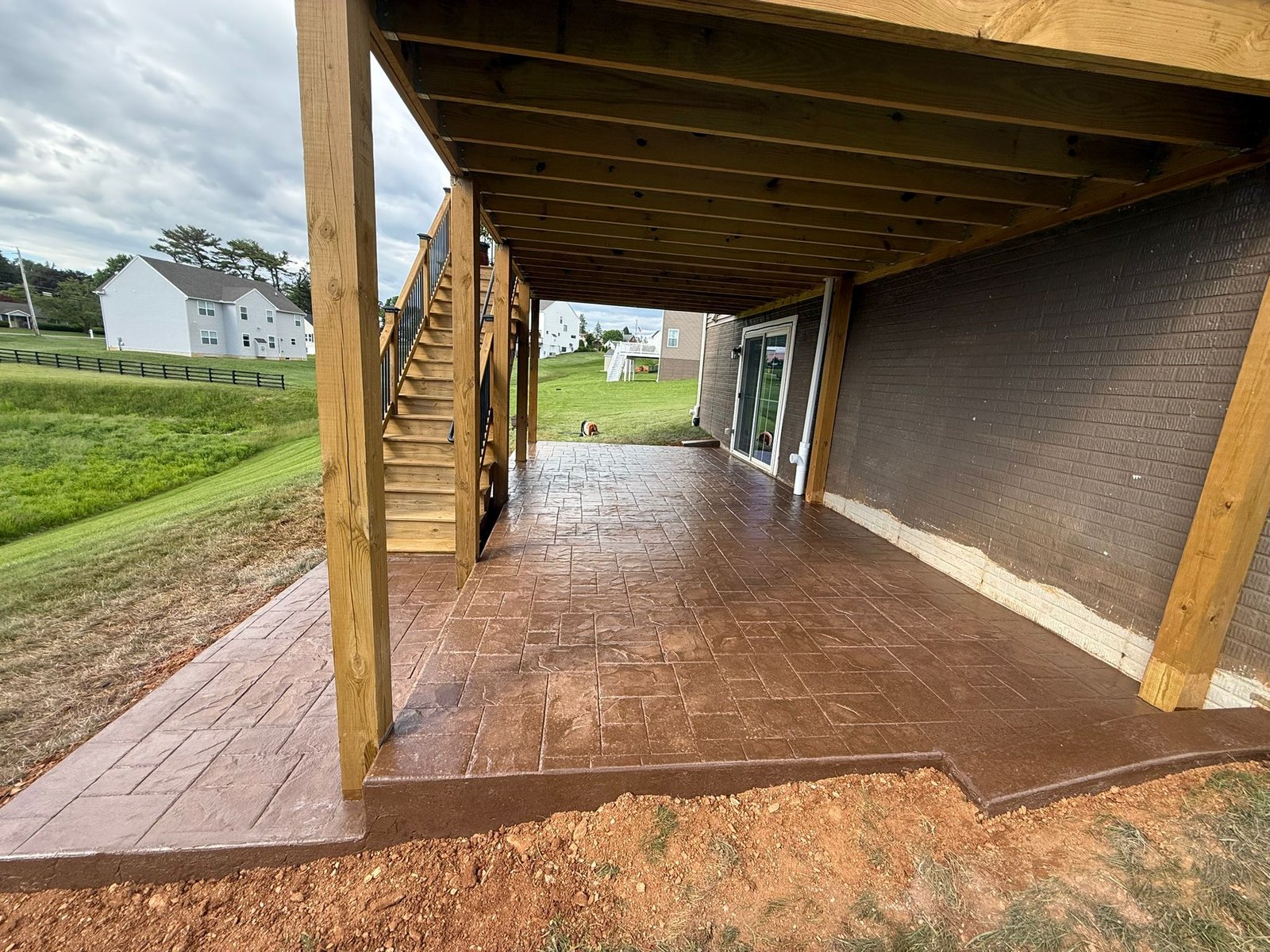
Standard concrete, poured normally, pressed with textured stamps before it fully cures, and treated with color — either integral (mixed in before pouring), surface-applied (broadcast on top during finishing), or both. Sealer is then applied to lock in color, protect the surface, and add sheen. Done right, the result is beautiful, durable, and long-lasting.
What It Requires to Stay Beautiful
Stamped concrete is NOT a no-maintenance surface. The sealer that gives it color depth and surface protection degrades with UV exposure, traffic, and weather. Resealing every 2-3 years is not optional — it’s necessary maintenance. Without it, colors fade, the surface becomes porous, and freeze-thaw damage accelerates. With proper resealing, a stamped patio looks great for 20+ years.
What Can Go Wrong — and Why It Doesn’t Happen With Us
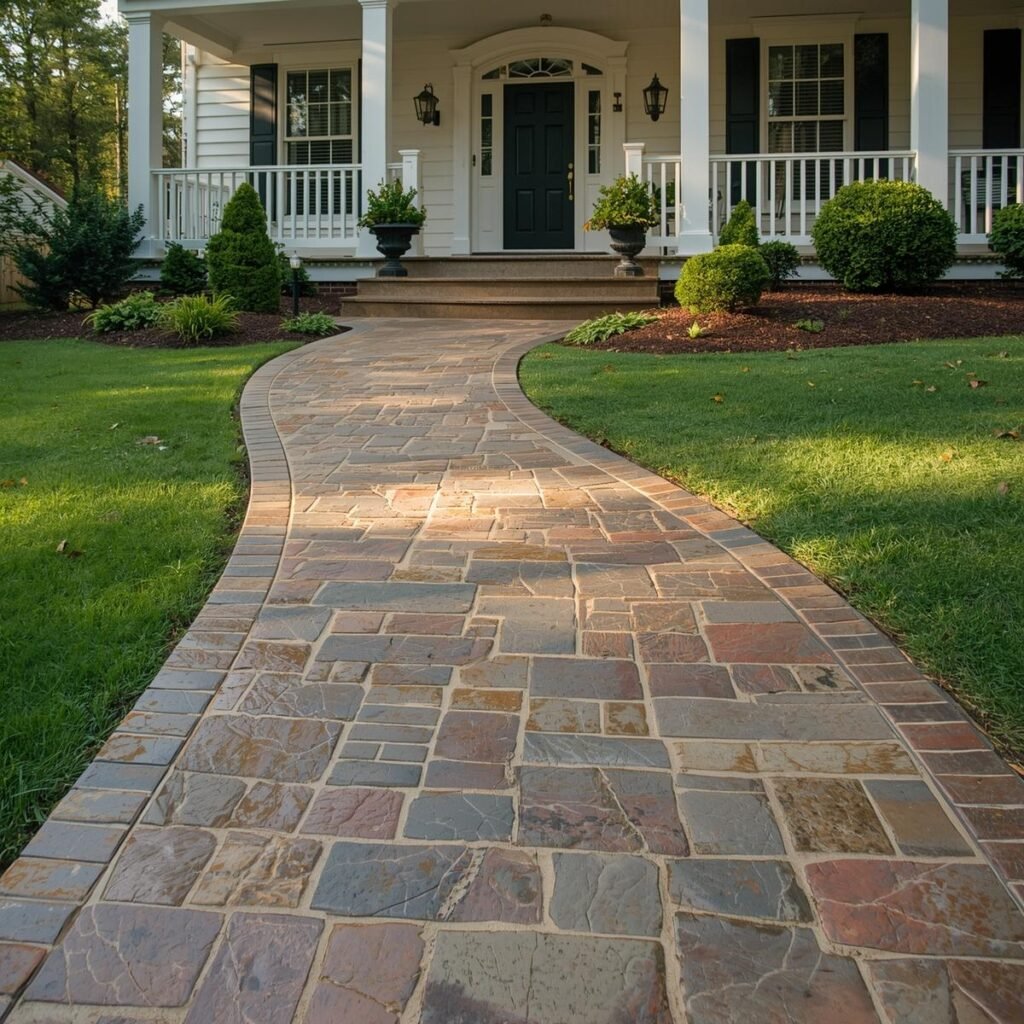
Poor stamping results — blurry patterns, muddy color, slab cracking — almost always trace back to one or more of three issues: stamping at the wrong stage of cure (too early or too late), inadequate sub-base preparation, or incorrect sealer application. All About Construction LLC has refined our stamped concrete process to eliminate each of these failure points. We won’t stamp unless conditions are right, full stop.
Is Stamped Concrete Right for Your Project?
Stamped concrete is excellent for patios, pool decks, walkways, driveways, and porches — any surface where you want both durability and aesthetic impact. It’s not ideal for areas that accumulate ice where abrasive de-icers are used heavily, as those can damage the sealer. Our team will help you choose the right surface for every application. Contact us for a FREE consultation.
📞 𝗖𝗮𝗹𝗹 𝘂𝘀 𝘁𝗼𝗱𝗮𝘆 𝗮𝘁 +𝟭 (𝟯𝟬𝟮) 𝟵𝟵𝟭–𝟳𝟬𝟬𝟬
📧 𝗘𝗺𝗮𝗶𝗹 𝘂𝘀 𝗮𝘁: 𝗮𝗹𝗹𝗮𝗯𝗼𝘂𝘁𝗰𝗼𝗻𝘀𝘁𝗿𝘂𝗰𝘁𝗶𝗼𝗻𝗹𝗰@𝗴𝗺𝗮𝗶𝗹.𝗰𝗼𝗺
to get your FREE service estimate today.
Leave a Comment