- Opening Hours: Monday - Friday 9 am to 5 pm

- Time Office:
Monday to Friday 9:00am - 5:00pm
- Call Us:
(302) 991-7000
- Email:
allaboutconstructionlc@gmail.com
- New Castle Ave, New Castle, 19720, Delaware, USA
- Call us!(302) 991-7000
- Mail addressallaboutconstructionlc@gmail.com
Slippery, Cracked, and Faded: Your Pool Deck Might Be More Dangerous Than You Realize - All About Construction, LLC
Apr/26
- allaboutconstruction.de
- Blog
- April 30, 2026
- 0 Comments
How to identify pool deck safety issues — and the concrete solutions that fix them permanently
Every summer, homeowners in Maryland, Delaware, New Jersey, and Pennsylvania open their pools and accept their pool deck as just part of the landscape — cracks, slippery spots, and all. But a deteriorating pool deck isn’t just an aesthetic issue. In a water environment where kids run, adults walk barefoot, and surfaces are perpetually wet, it’s a genuine safety hazard that deserves the same attention as the pool itself.
The Safety Problem Nobody Talks About
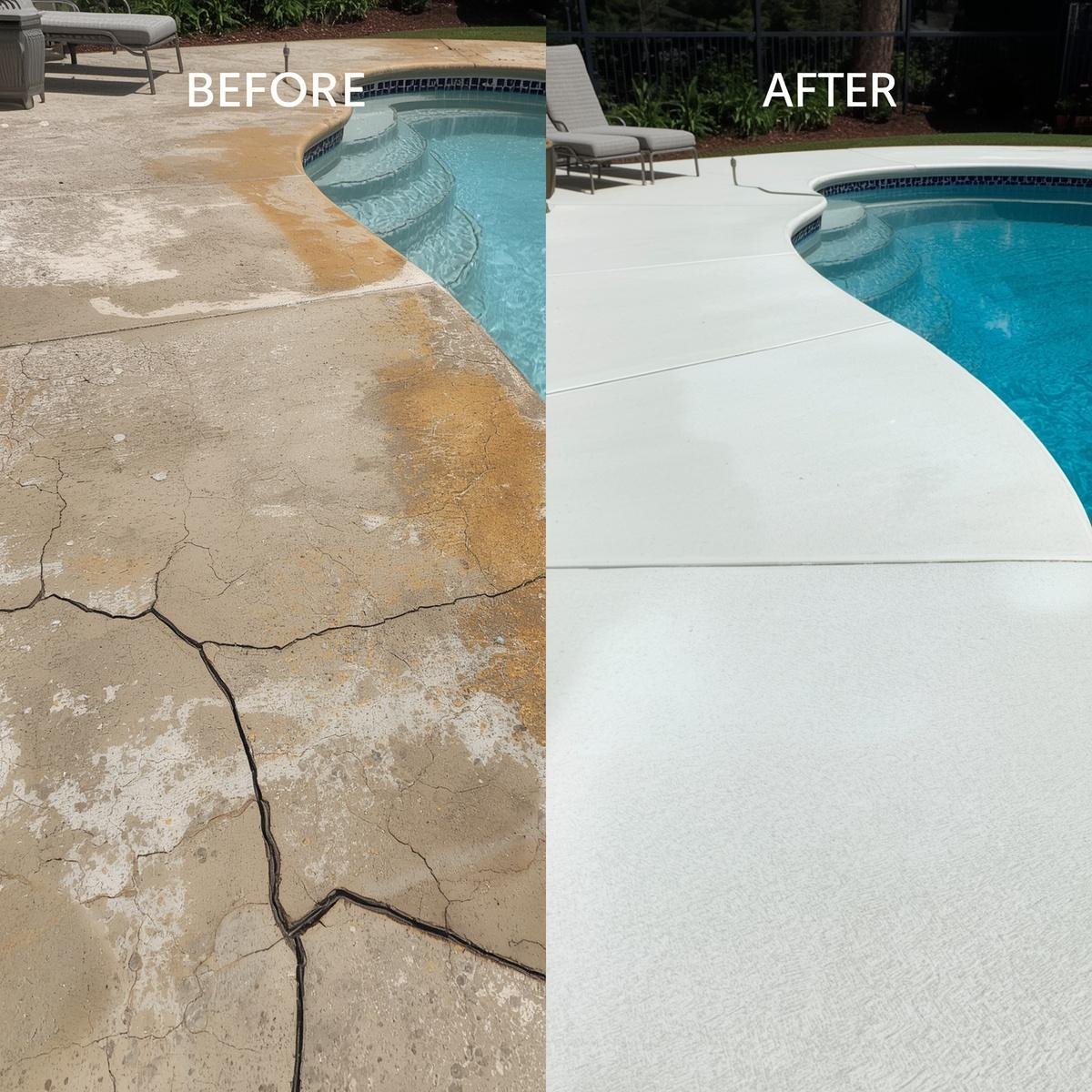
Pool deck surfaces become dangerously slippery as they age and lose their original texture. Broom finishes worn smooth over years provide minimal slip resistance when wet. Stamped surfaces that haven’t been resealed lose their grip. And even small cracks and settled sections create toe-catching edges that can cause falls.
What Freeze-Thaw Cycles Do to Pool Decks
In our Mid-Atlantic region, pool decks endure the same freeze-thaw damage as driveways and walkways. Water enters surface cracks, freezes, expands, and widens those cracks over winter. By spring, a deck that looked fine at pool closing looks noticeably worse at opening. Each season compounds the previous one’s damage.
The Right Solutions
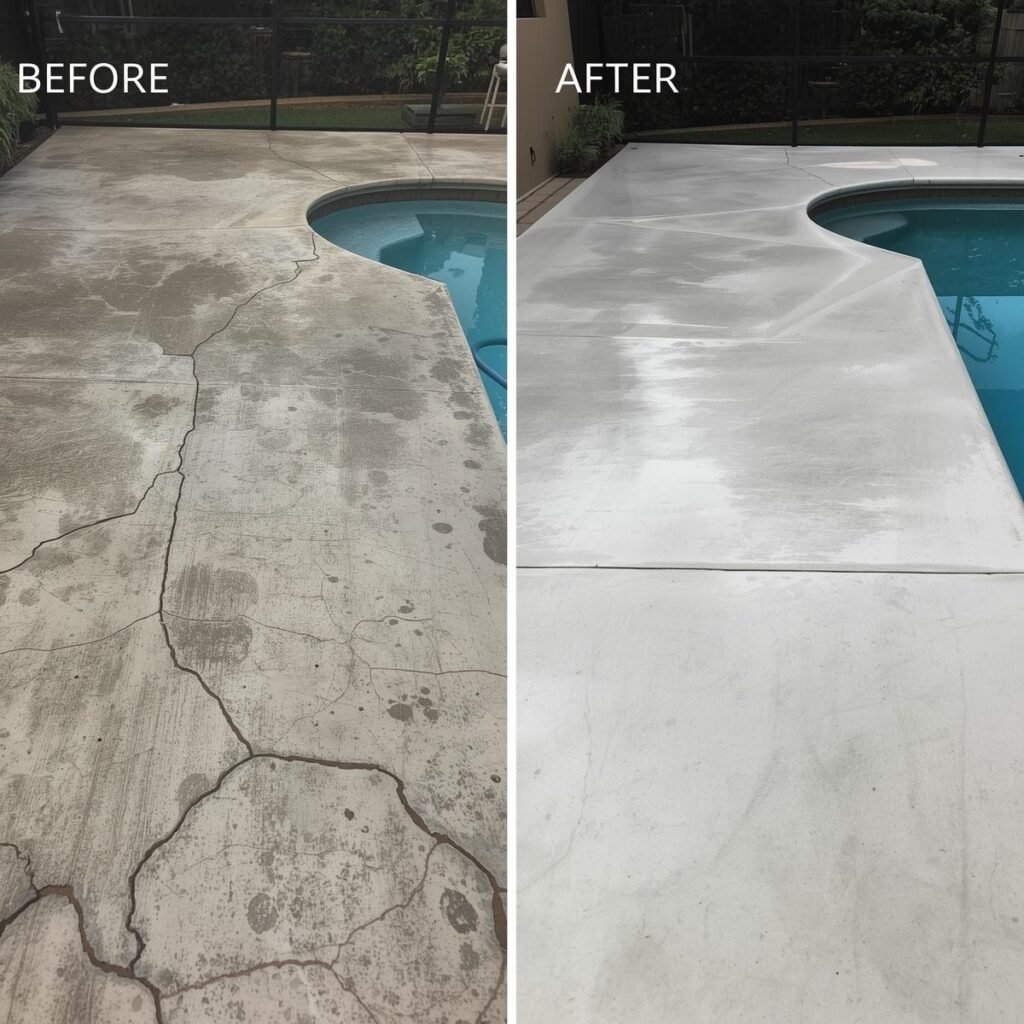
Minor surface deterioration: professional concrete resurfacing with slip-resistant overlay coating restores texture and seals cracks without full replacement. Significant cracking, settling, or structural compromise: full replacement is the better long-term value. All About Construction LLC evaluates each pool deck honestly and recommends only what the situation actually requires — no upselling, no fear tactics.
Don’t wait for a slip-and-fall to motivate a pool deck repair. Contact All About Construction LLC for a FREE pool deck assessment throughout MD, DE, NJ & PA.
📞 𝗖𝗮𝗹𝗹 𝘂𝘀 𝘁𝗼𝗱𝗮𝘆 𝗮𝘁 +𝟭 (𝟯𝟬𝟮) 𝟵𝟵𝟭–𝟳𝟬𝟬𝟬
📧 𝗘𝗺𝗮𝗶𝗹 𝘂𝘀 𝗮𝘁: 𝗮𝗹𝗹𝗮𝗯𝗼𝘂𝘁𝗰𝗼𝗻𝘀𝘁𝗿𝘂𝗰𝘁𝗶𝗼𝗻𝗹𝗰@𝗴𝗺𝗮𝗶𝗹.𝗰𝗼𝗺
to get your FREE service estimate today.
Leave a Comment